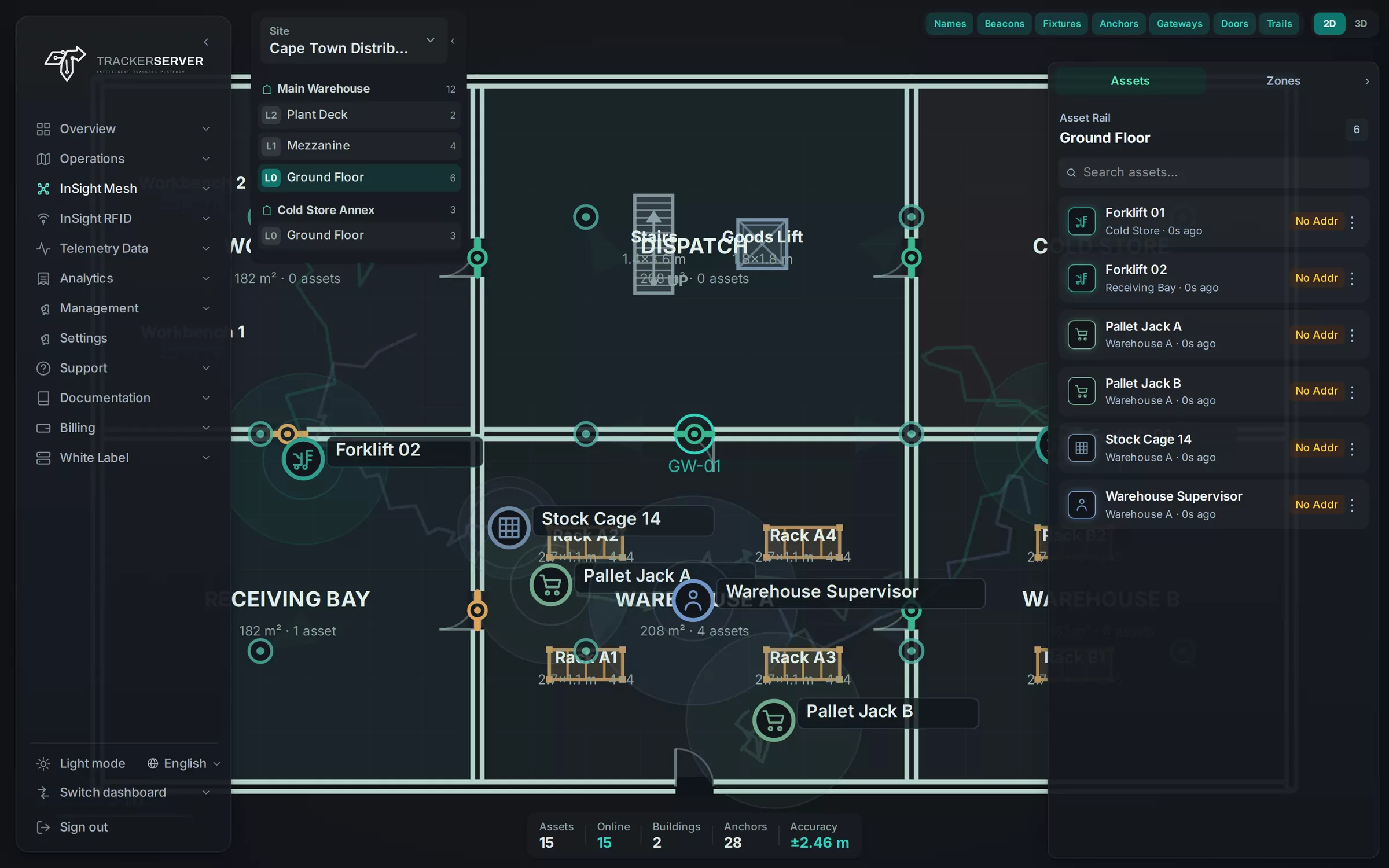
The warehouse, as it is at this minute.
A warehouse management system knows where stock ought to be. Tags tell your client where it is. The gap between the two is where time goes.
- Stock from receiving to dispatch
- Pallet jacks and trolleys found fast
- Dwell time in every zone
- Cold rooms on the same plan
What gets a tag.
Pallets, cages and roll containers
Followed through the building rather than scanned at two ends of it.
Handling equipment
Pallet jacks, trolleys and ladders: shared, moved and left wherever they were last used.
High-value or urgent stock
The consignments somebody will phone about.
Zones worth drawing.
Receiving
Where stock arrives.
Storage aisles
Where it should rest.
Staging and dispatch
Where it waits to leave.
Cold rooms and freezers
Where temperature matters too.
The reports a warehouse manager reads.
Dwell time shows how long stock stands in receiving before anyone puts it away, and how long a finished order waits at dispatch. Movement shows the routes stock really takes. Occupancy shows which areas fill up, and when.
- Dwell time per zone
- Movement between areas
- Occupancy through the day
- CSV export for their own systems
At the dock door: RFID.
A mesh follows what carries a battery tag. For stock that moves item by item, InSight RFID reads labels as they pass fixed readers at doors and docks, and keeps each read as evidence of where and when an item was seen. Receiving and dispatch are checked against their documents, and anything unexpected goes to a person to review. InSight RFID is in early access.
Other places
Which of your clients has this problem?
Tell us the kind of site and what goes astray in it. We will set out what a first installation would take, in hardware and on your platform.